
Mobile detailing marketing plan
Mobile Detailing Marketing Ideas: A Practical 30-Day Plan
Build a marketing system that tells the right customer where you work, which package fits, what changes the quote, which photos to send, and what happens after a request.
TL;DR
The strongest mobile detailing marketing is operationally specific. Define a profitable service area, describe packages by customer need, ask for a small set of useful photos, publish truthful starting-price logic, and follow every lead through to a clear next step. Spend the first 30 days fixing that foundation before adding more ad channels.
A practical 30-day mobile detailing marketing plan
| Week | Build | Done when |
|---|---|---|
| 1: Offer and coverage | Choose two or three core jobs, a real service area, minimum job rules, and location constraints. | A customer can tell whether the service and location are a likely fit without calling. |
| 2: Proof and intake | Publish package-fit copy, a photo checklist, quote factors, before-and-after context, and an enquiry form. | Staff can review most new requests without a second message asking for basic details. |
| 3: Local channels | Update Google Business Profile, one service-area page, vehicle/card QR destinations, and referral follow-up. | Every channel uses the same service area, package names, contact route, and limitations. |
| 4: Measure and revise | Review qualified requests, missing information, quote-to-book rate, referrals, and unprofitable travel. | The next change is based on a recorded friction point, not a new marketing trend. |
Choose a market position customers can understand
"Mobile detailing for everyone" is broad but not useful. A clear position tells a likely customer which job, vehicle, location, and service standard the business is set up to handle. Examples include maintenance details for apartment residents with approved parking, interior recovery for family SUVs, recurring care for small commercial fleets, or paint-preparation work that requires an inspection before pricing.
Write a one-sentence operating offer: We provide appointment-based interior and maintenance detailing for passenger vehicles within these cities, when the property allows the work and the customer can provide the stated access. Then list the exceptions. If oversized vehicles, severe biohazards, active mold, inaccessible garages, street-side work, or correction services are outside the normal process, say so without insulting the customer.
Use the same position in search listings, service pages, quote forms, vehicle graphics, cards, referral messages, and staff replies. Consistency helps a customer self-qualify and prevents marketing from promising jobs the operation cannot deliver.
Build a photo-assisted quote intake
The goal is not to make a customer diagnose the vehicle. Ask for enough information to decide fit, identify obvious scope changes, and prepare the next conversation. Keep the first request short and explain why each photo matters.
- Vehicle year, make, model, body type, and the customer's main goal.
- One full exterior view so size and access points are visible.
- Front seats, rear seats, floor areas, and cargo area for interior work.
- Close-ups of pet hair, stains, sand, sap, oxidation, wheel condition, or another stated concern.
- ZIP code or city, property type, parking surface, garage clearance, and permission constraints.
- A location photo when drainage, shade, traffic, power, water, or safe working space may change feasibility.
- Preferred date range, clearly described as a request rather than confirmed availability.
State what happens next: staff review, request for more information if needed, estimate or inspection, and only then appointment confirmation. Do not describe an automated form as an instant quote when vehicle condition and site rules still require human judgment.
Make local visibility match the real service area
Google's official Business Profile guidance says a service-area business visits customers directly and, when it does not serve customers at its address, should remove that public address. Google currently allows service areas based on cities, postal codes, or other supported areas rather than a radius, with up to 20 areas, and advises businesses to be specific and accurate.
Do not list distant cities merely to appear larger. Build one useful service-area page that explains the actual boundary, common property types, travel or minimum-job rules, parking requirements, weather policy, and how a customer checks an uncertain location. Separate pages are useful only when they contain genuinely different local information, not the same paragraph with a city name swapped.
Keep the business name, service categories, hours, phone, website, package names, and appointment language consistent. Add representative work photos with permission and context. Ask customers for honest reviews after completed work, but never write the review for them or condition a benefit on a positive rating.
Set advertising and wash-water boundaries before promotion
The FTC's small-business advertising guidance says advertising should be truthful, non-deceptive, and supported. Review both direct and implied claims in before-and-after photos, captions, package names, guarantees, and environmental language.
Claims such as "removes every stain," "scratch-free," "same-day anywhere," "permanent protection," "chemical-free," or "eco-friendly" need evidence and carefully stated limits. A dramatic photo should identify the service performed and should not imply that every vehicle will receive the same result. Get permission to use customer vehicles and remove license plates or personal details when appropriate.
Location feasibility is also part of honest marketing. EPA stormwater material explains that outdoor vehicle washing can send detergent-rich water containing nutrients, metals, and hydrocarbons into storm drains. Federal guidance is background, not a substitute for state, municipal, property, and wastewater rules. Before advertising apartment, office, street, or fleet-lot service, verify where the team may work and how wash water is managed.
Train staff to say "we will check the site and local requirements" when drainage, property permission, or safe working space is uncertain. Do not let a broad "we come to you" slogan override a real operating restriction.
Rewrite package copy around customer decisions
Package names should help a customer choose a starting point while preserving inspection and quote boundaries. Replace decorative labels with the job, likely fit, and factors that change scope.
| Copy element | Weak version | Useful version |
|---|---|---|
| Maintenance package | Premium Refresh | For regularly maintained passenger vehicles with light interior and exterior soil; heavy pet hair, stains, and correction work are assessed separately. |
| Location | We come anywhere. | We serve the listed cities when the property permits detailing and the site provides safe legal working space. Send the address type and parking notes for review. |
| Starting price | From $X. | Starting price applies to the stated vehicle size and condition. Photos confirm pet hair, stains, oversize vehicles, add-ons, access, and travel before final approval. |
| Timing | Fast same-day detail. | Estimated working time is provided after package, condition, vehicle, and location review. The appointment is confirmed separately. |
| Result claim | Every stain removed. | We inspect the material and condition before describing a likely result; some staining, wear, damage, or odour sources may remain. |
Connect each channel to one next step
Every channel should carry the same facts but can lead to a different task. Label the destination so customers know what happens after a click or scan.
- Google Business Profile: service area, hours, services, photos, reviews, website, and the official contact route.
- Service-area page: cities served, property constraints, travel logic, and a route for uncertain addresses.
- Package page: customer goal, included work, exclusions, starting-price conditions, and photo instructions.
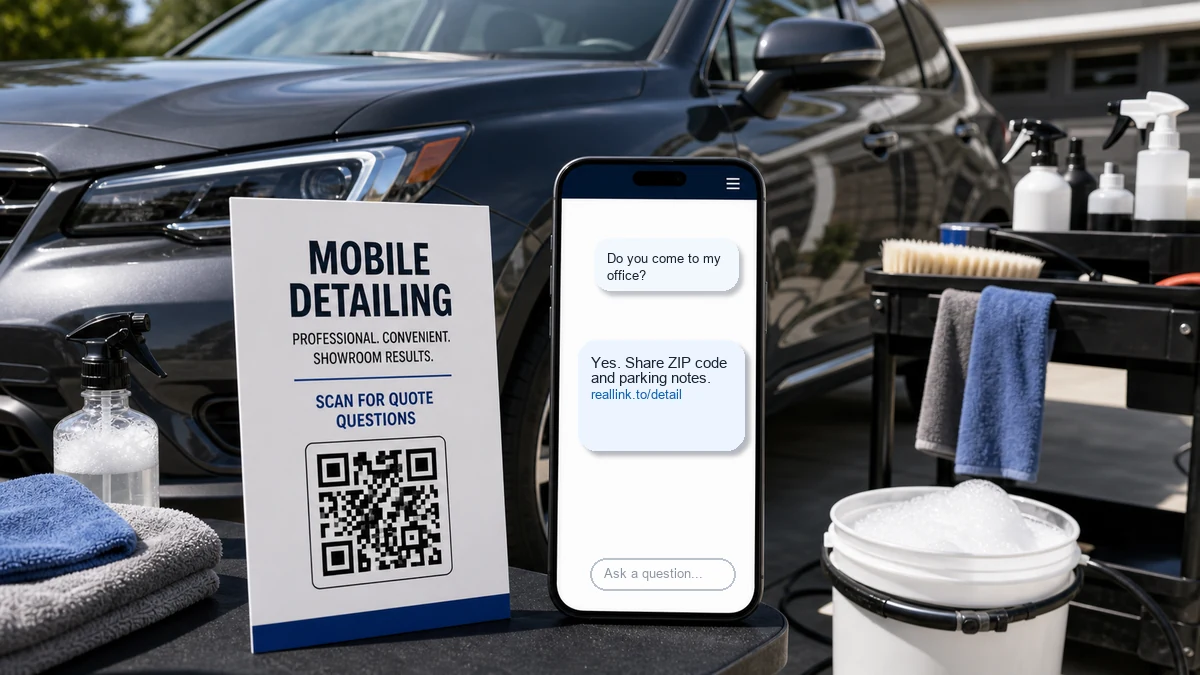
- Vehicle graphic: a short purpose label and official URL; never encourage active drivers to scan.
- Referral card: identify the referring context and open the most relevant package or preparation page.
- Voicemail: state when replies are handled and where a caller can check service area or prepare photos.
- Follow-up: send a completion note, care instructions, honest review request, and rebooking path only when appropriate.
- QR code: test the printed code and fallback URL, then inspect the physical code and destination regularly.
Use campaign parameters or separate controlled destinations when useful, but do not collect more personal data than the customer task requires. A scan count without a qualified request is only an attention signal.
Worked example: from vague leads to reviewable requests
A two-person operator serves three adjoining U.S. cities. Most leads arrive through Google, a van decal, and referrals. The old page lists four package names and "prices from" amounts but does not say which vehicles or conditions qualify. Staff spend several messages asking for the address, vehicle size, pet-hair condition, and parking information.
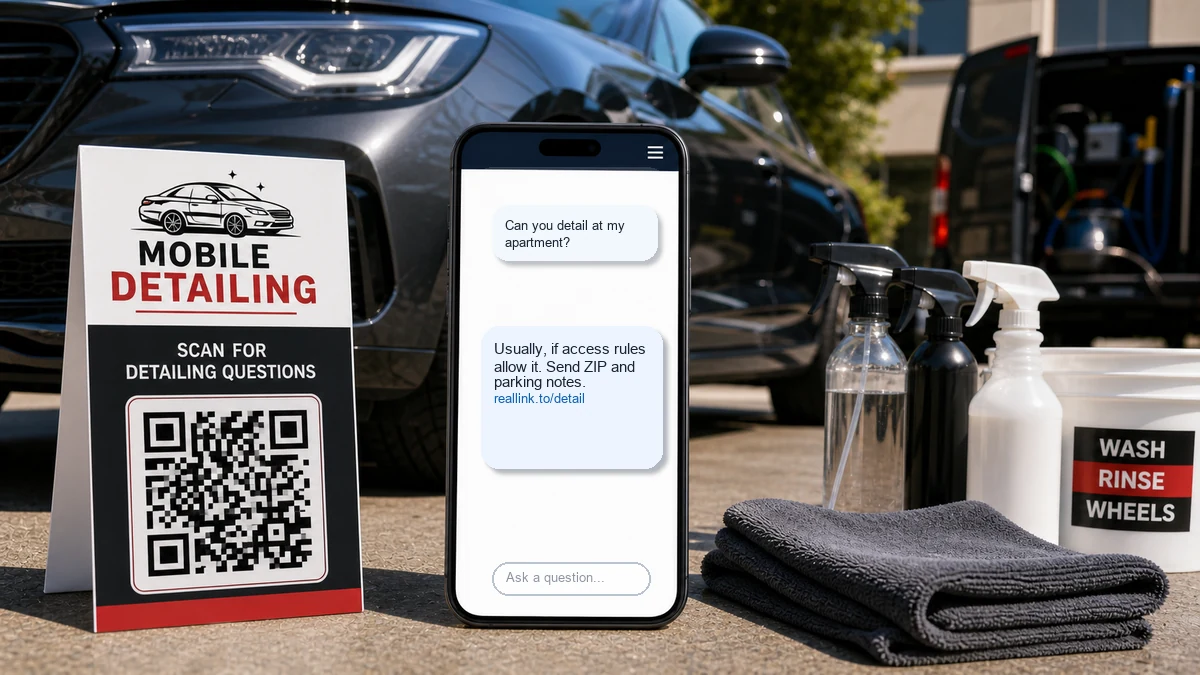
In week one, the owner limits the promoted offer to passenger vehicles in the three profitable cities and documents apartment and office-site requirements. In week two, the business rewrites packages around maintenance, interior recovery, and exterior preparation, then adds five required photo views. In week three, Google Business Profile and the website use the same areas and package names. The van QR opens the quote-preparation page, not the homepage.
After 30 days, the owner compares channels using qualified requests rather than raw traffic. A qualified request is in the service area, fits a promoted service, includes the minimum review information, and has a reachable next step. The operator also records quote-to-book rate, missing-information follow-up, travel declined, average response time during staffed hours, referral source, repeat booking, and reasons good-fit requests do not proceed.
The data shows that referrals convert well but apartment requests often lack property permission. The next change is a clearer apartment checklist, not another discount. That is a marketing decision grounded in operating friction.
Run the system with ordinary tools first
A focused mobile page, a short quote form, a shared inbox, a spreadsheet, and a written call script are enough to test this process. Assign an owner to update service areas, package conditions, access rules, weather language, and destination links. Review the top unanswered questions each month.
Do not buy more software until the team can state which repeated task it should improve. The operating standard comes first; software should make that standard easier to deliver or measure.
Sponsored tool note: where RealLink AI fits
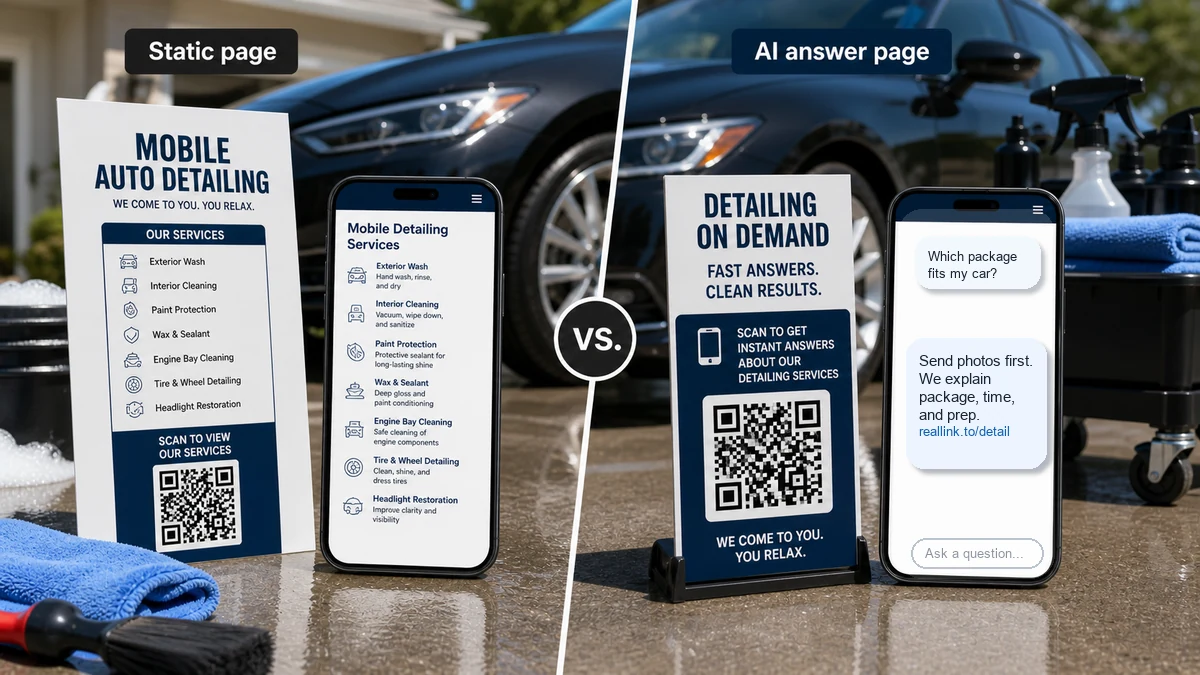
RealLink AI can provide a public answer page for a vehicle card, referral card, flyer, website link, or QR code. It answers from information the business supplies and can group recurring question themes for owner review. That can help when the main friction is repeated questions about service area, package fit, preparation, or location rules.
It does not inspect vehicle condition, issue a final quote, confirm property permission, check live appointment or technician availability, or determine local wash-water requirements. Keep those decisions in the operator's reviewed process and official booking channels.
Sources and further reading
FAQ about mobile detailing marketing
What is the best marketing idea for a mobile detailing business?
Start by making the next step easy: publish an accurate service area, explain which customer each package fits, show what changes a quote, and ask for a small set of useful vehicle and location photos.
How should a mobile detailer describe service areas on Google?
Use accurate cities, postal areas, or other supported areas. A service-area business that does not serve customers at its address should remove the public address. The website should explain the real travel boundary and location restrictions.
Should mobile detailers publish prices online?
Publish starting prices or useful ranges when they are accurate, then explain what can change the quote: vehicle size, condition, pet hair, stains, add-ons, access, and travel.
What photos should a mobile detailing quote request include?
Ask for the full exterior, front and rear seating areas, floor and cargo area, and close-ups of the stated concerns. Request a location photo when parking, drainage, shade, or access may affect the job.
What should a mobile detailing QR code link to?
Link to the task promised beside the code: checking service area, comparing package fit, viewing photo instructions, preparing a request, or asking about published business information.
What should mobile detailers avoid claiming in ads?
Avoid unsupported guarantees about stain or scratch removal, coating performance, fixed completion time, lowest price, environmental impact, and immediate availability. Claims should be truthful and supported.
How should a mobile detailer measure marketing results?
Track qualified requests, quote-to-book rate, missing-information follow-up, travel outside the service area, repeat bookings, referrals, and channel source. Raw clicks and scans do not show whether a request was workable or profitable.